What studies on Radbahn exist?
For now, there is a potential and risk analysis commissioned by the Reallabor Radbahn, which provides information on the urban and social strengths and weaknesses of the overall Radbahn route.
Besides this, the Senate Department for the Environment, Transport and Climate Protection is preparing a technical feasibility study that examines the technical feasibility of the section Oberbaumbrücke-Kottbusser Tor.
Why the studies?
- Consolidation and discussion of previous assumptions
- Educate residents and potential users of the Radbahn
- Provide political decision-makers with a solid foundation for decisions regarding the implementation of the overall project
- Serve as a source of inspiration for comparable projects
- Create broad support for the project within society
Scientific Studies
Potential and Risk Analysis – Commissioned By Reallabor Radbahn
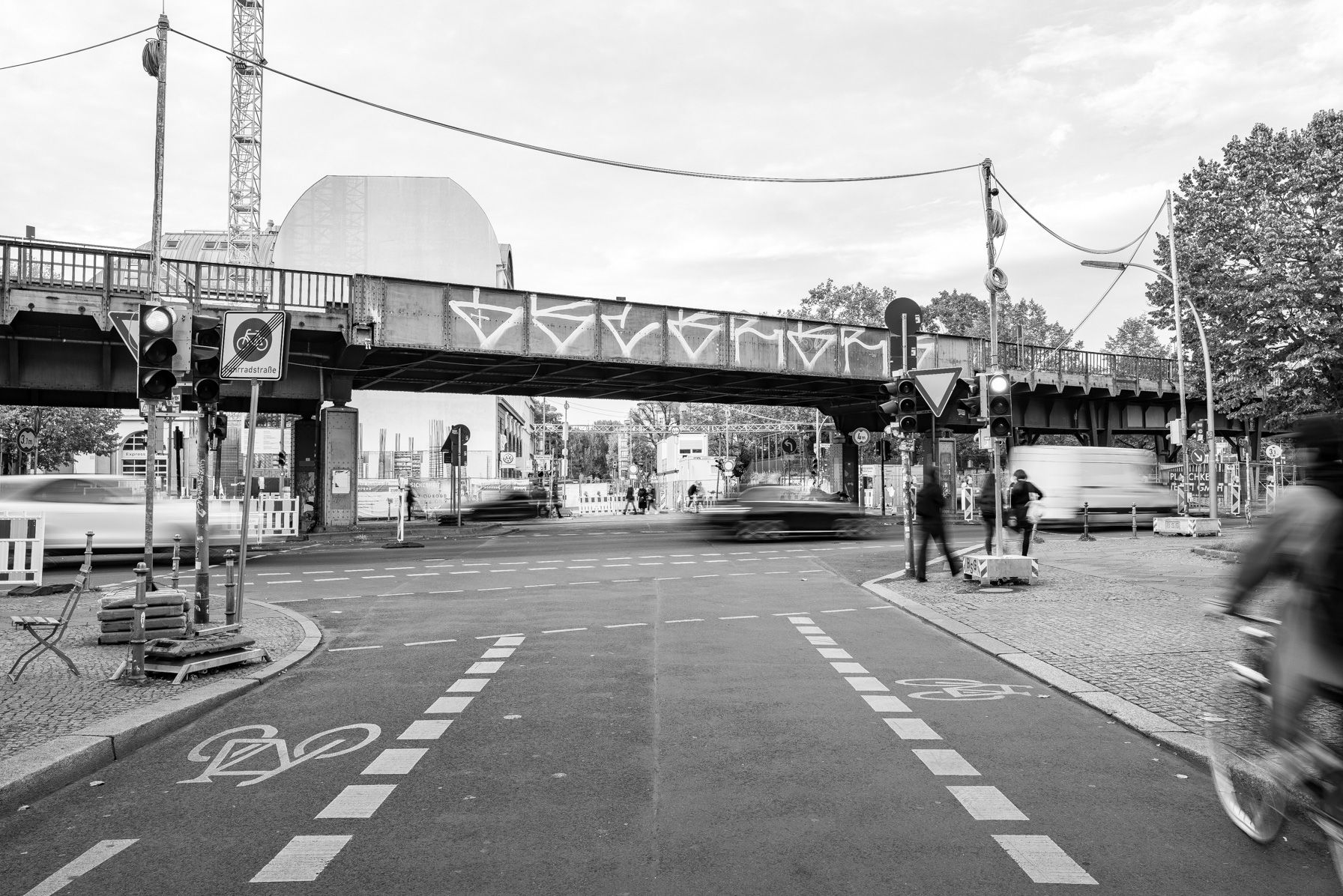
Fundamental to our work is a potential and risk analysis that was initiated by the Reallabor Radbahn team. Our colleagues from Urban Catalyst and their partners examined the entire Radbahn route until October 2021.
Bridging the mobile, the ecological, the technical and the human
The study examines Radbahn with respect to six thematic fields (urban space, ecology, economy, technology, social issues, and mobility) and therefore is less of technical nature. The analysis will show which route segments offer possible opportunities for urban development or bicycle traffic, but also where and in what form planning or construction challenges are to be expected.
Concrete Questions:
- How can the Radbahn support the transition to more sustainable forms of transport?
- What contribution can the Radbahn make to cycling trends in Berlin?
- How do residents, commerce and car drivers benefit from the Radbahn?
- How can the Radbahn shape road space in an ecological way?
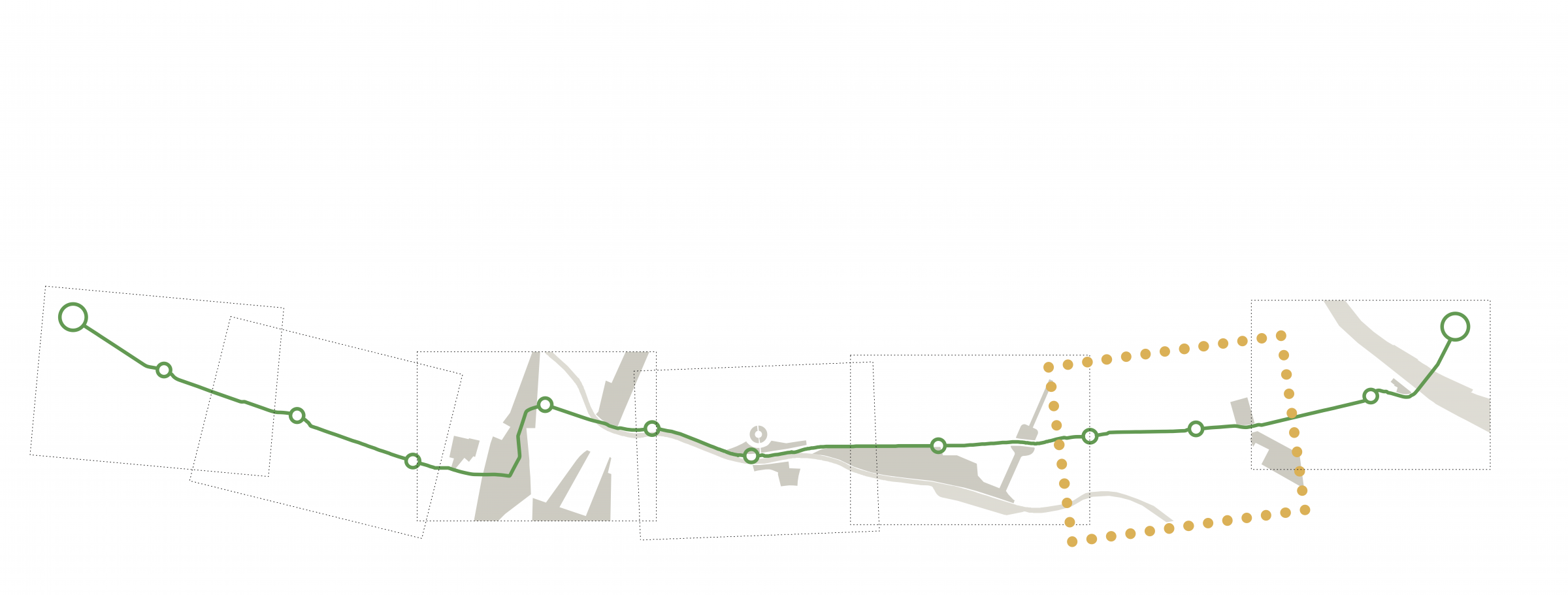
Feasibility And Transferability Study by Reallabor Radbahn
The test site will be built in the fall of 2022 and we will leverage our experiences and findings from the site—as well as input from our accompanying events, discussions and external studies—to draw conclusions regarding the entire Radbahn route. In doing so, we will focus on the following thre areas:
- Urban space: vegetation, street furniture, small businesses, arts & culture, etc.
- Transportation: safety, intersection design, multimodality, etc.
- Innovation: intelligent traffic light control, traffic guidance systems, etc.
Outlook
Together with experts, we want to further develop possible feasible elements, both in terms of urban and traffic integration as well as the technical and structural implementation of bike lanes in the center of the road. Questions of sustainability and economic efficiency will also be given special consideration.
Set of criteria for similar projects
All findings and results collected during the project until the end of 2023 will be closely interlinked and summarized in a final report. The purpose of this report is to assess how the findings can be applied to the entire Radbahn route. In addition, the report will be used as a basis for formulating recommendations for action for similar cycling and urban development projects and real-world labs in other cities and contexts.
Technical Feasibility Study – Commissioned by the Berlin Senate
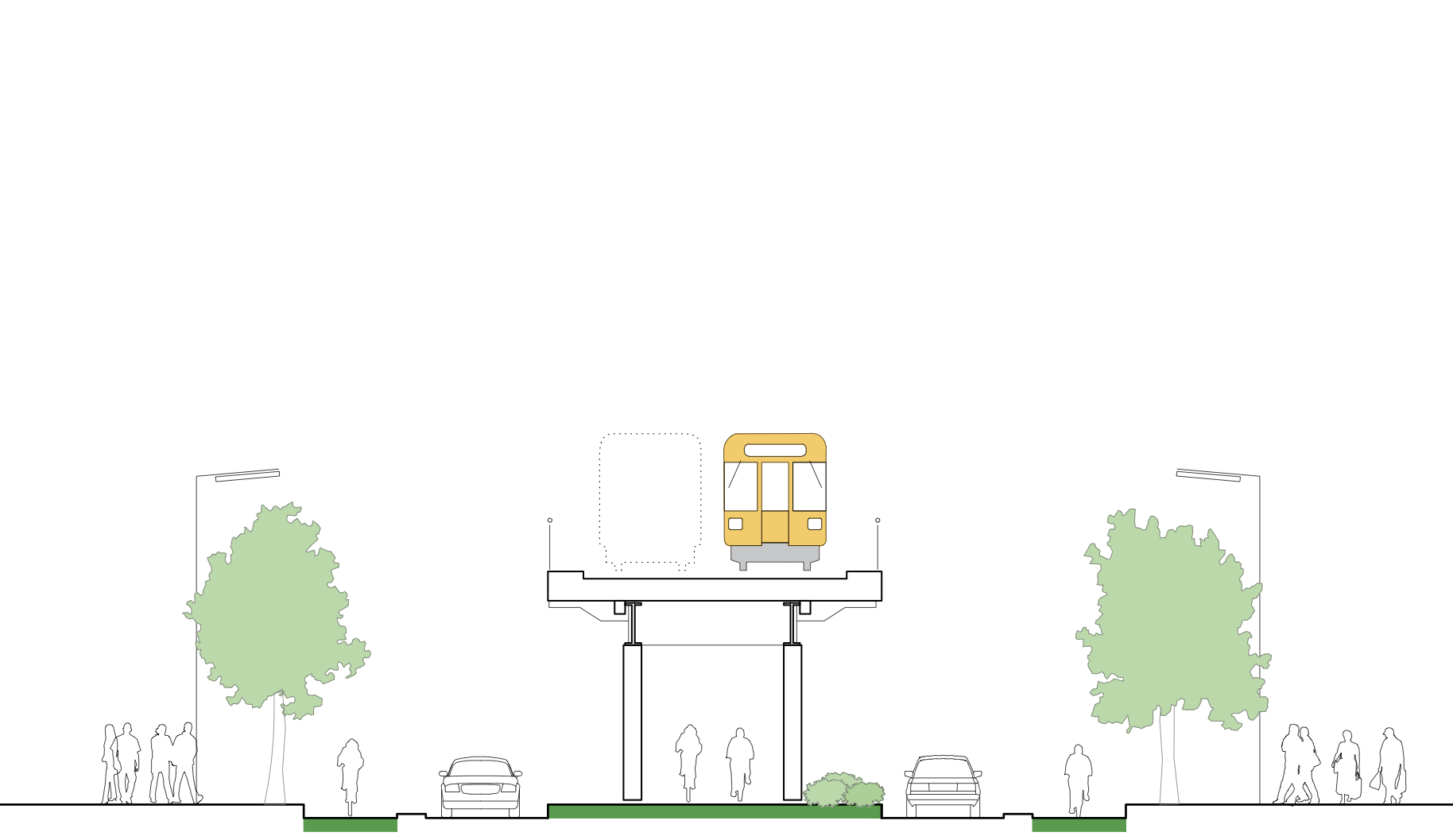
Section in focus: Oberbaumbrücke - Kottbusser Tor
An independent feasibility study commissioned by the Berlin Senate Department for the Environment, Transport and Climate Protection (SenUVK) is also of importance to our project. In this study, the company Rambøll, a contractor, is subjecting three variants of the Radbahn concept on the Oberbaumbrücke – Kottbusser Tor section to an examination of a purely traffic engineering nature.
How can the Radbahn be accomplished?
The leading question here is: “Which traffic-technical variants and preconditions allow for the construction of the Radbahn?” The feasibility study, the results of which are expected at the end of 2021, is an important building block for the Radbahn. Together with the above-mentioned potential and risk analysis, the results of the Senate’s traffic feasibility study will be incorporated into our further planning.
Visit the website of SenUVK